Ian Middleton

Writer - Photographer - Teacher

Content creator - web Design - SEO - SEM

Ireland Articles

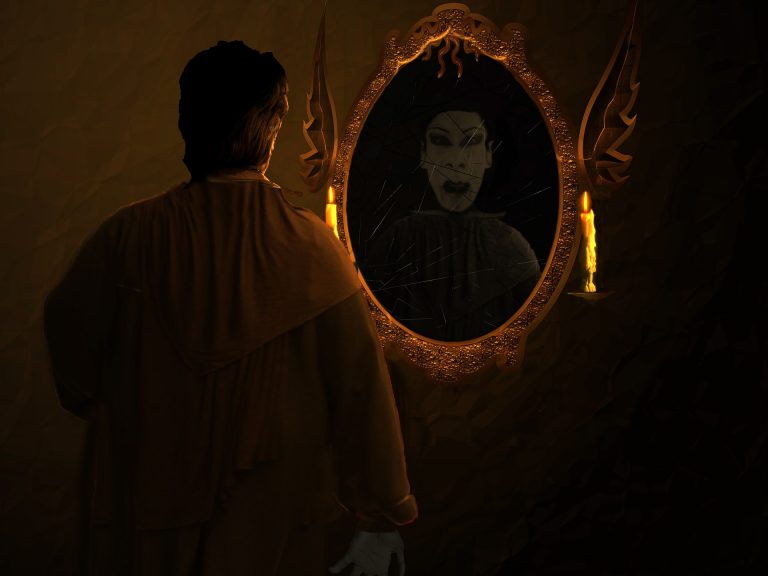
Halloween - pumpkin lantern
Read Article
View down to the centre of Ljubljana and the Ljubljana Castle lit up in the colours of the Irish flag to celebrate Saint Patrick's Day weekend 2016 in Slovenia. The castle was lit up green last year to celebrate the event, but as Ljubljana is the European Green Capital for 2016 the castle is already being lit green at night for the whole year. So the Irish embassy arranged for the colours of the flag to adorn the castle for 2016.
Read Article
Dun Aonghasa on Inishmore, Galway, Ireland.
Read Article
Loftus Hall, County Wexford, Republic of Ireland. Located near to the Hook Peninsula, this manor house is the location for a famous local legend about the devil visiting a lonely woman.
Read Article
ireland-2611916_1920-low
Read Article
Sunset over Knocknarea Mountain and Sligo Bay, Ireland. The small mound on top of this mountain is the burial mound of Queen Maeve, the famous Queen who instigated the Táin Bó Cuailgne (Cattle Raid of Cooley). She is buried under a cairn of 40,000 tons of rock, which is 6000 years old. Legend says she is buried standing upright, spear in hand and facing Ulster, her enemy.
Read Article
Donegal Coast
Read Article
Views from the Poisoned Glen in Northern County Donegal, Ireland.
Read Article
Newgrange megalithic passage cairn entry stone.
Read Article
Balor's soldiers on the east side of Tory Island, County Donegal, Ireland.
Read Article
video-4647668_1920
Read Article
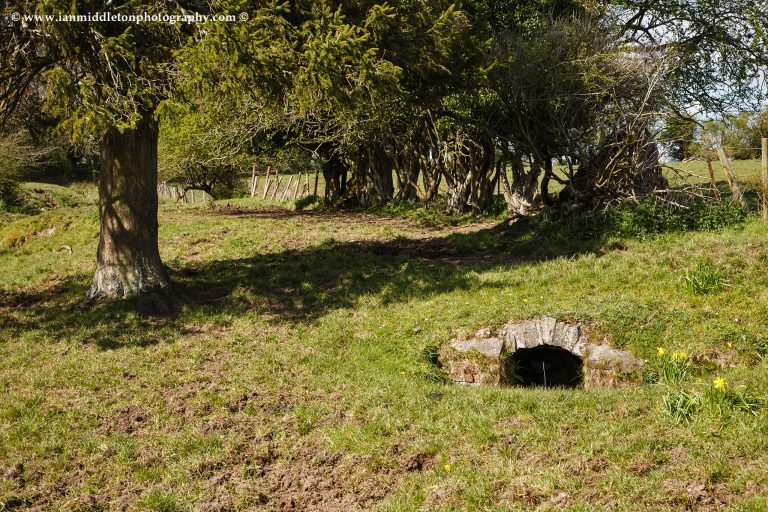
Trinity Well, in the grounds of Newberry House, near the village of Carbury, County Kildare, Ireland. Trinity Well, known in ancient Irish legend as the Well of Sergais, is the source of the magical River Boyne. The birth of the River Boyne has its roots in an ancient legend known as the Well of Sergais. It’s said that a long time ago when the Gods walked the earth there was a well shaded by magical hazel trees bearing crimson nuts. It was believed that whoever should eat these nuts would be graced with the knowledge of the world. The nuts fell off the trees and into the well, and were eaten by one of the vividly coloured salmon who swam there. For this reason, it became known as the salmon of knowledge. This well was owned by the God Nechtain, who was very possessive of the well. Only he and his three cup bearers were allowed anywhere near it. But one day his wife, referred to as Boann or Boínn (meaning she who has white cows; white cows were considered cows of the otherworld), was overcome with curiosity one day and went to the well without Nechtain’s permission or knowledge. There are various stories as to what she did there, but whatever it was resulted in the well overflowing and gushing forth onto the surrounding countryside and forming the Boyne Valley. Legend says the Boann inhabits the Fairy Mound where Newberry House now stands. It's here that the legendary Irish Giant, Celtic warrior and leader of the Fianna, ate the Salmon of Knowledge and gained the wisdom and power that enabled him to regain his rightful place as leader of teh Fianna and go on to become Ireland's greatest warrior and protector. The well was since christianised and is now known as Trinity Well. Every year the local priest peforms the annual Rosary the first Sunday in June.
Read Article
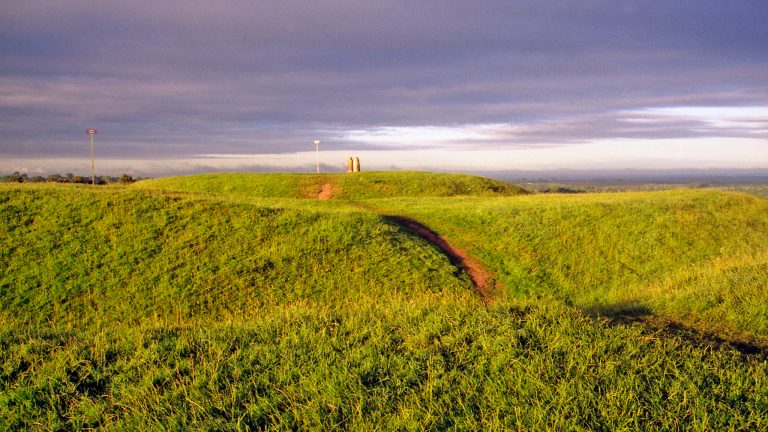
Iron age rath at the Hill of Tara in County Meath, Ireland. Tara was once the ancient capital of Ireland, from where the high king ruled over the country. The upright stone you see on the mound is the Lia Fail (stone of destiny). According to Celtic legend the Lia Fail was used during the coronation of the high king, and was believe to emit a roar when the true high king touched it. (I tried but there was no sound, so I crossed being high king of Ireland off my list of potential destinies).
Read Article
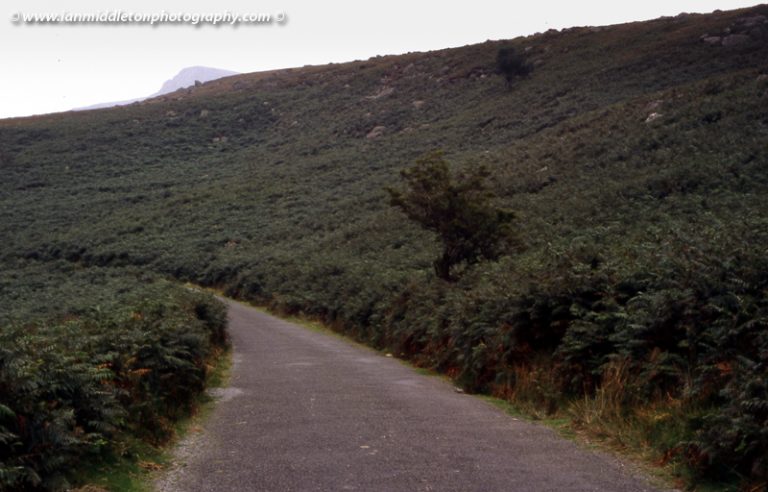
Magic Road in the Comeragh Mountains, County Waterford, Ireland.
Read Article
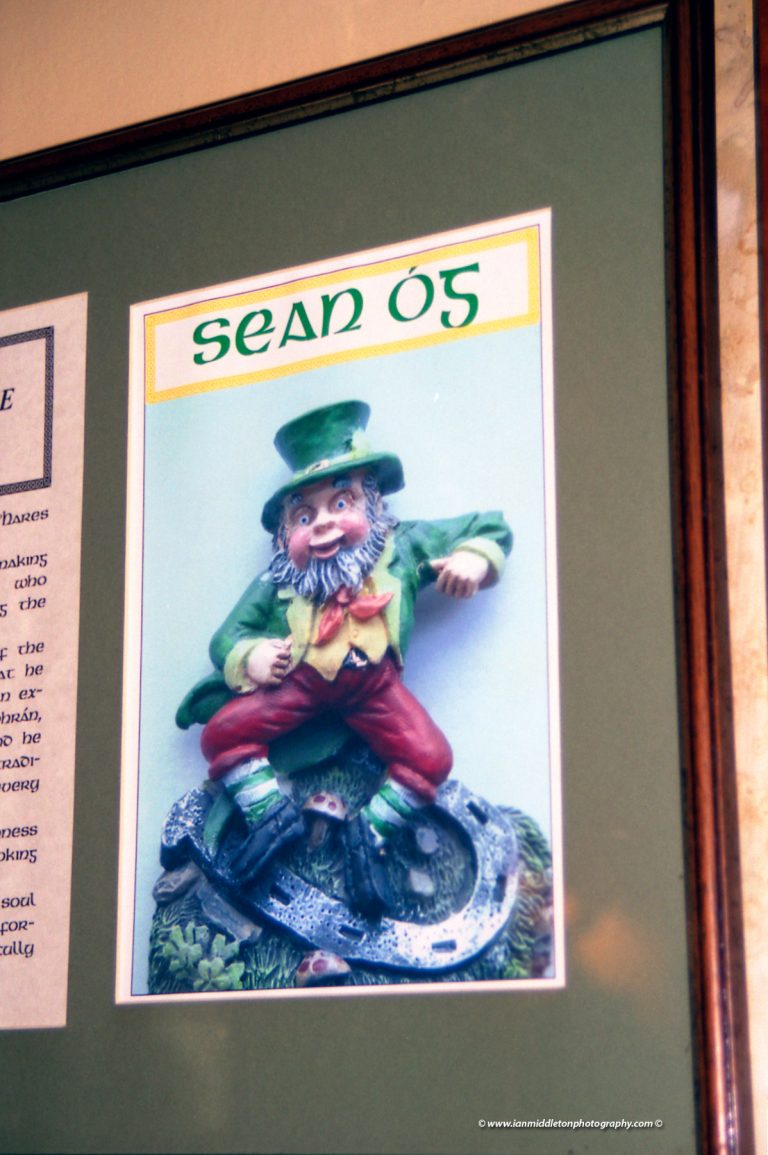
Sean Og the leprechaun in O hare pub in Carlingford. County Louth, Ireland.
Read Article
Brexit - European Union, which way to turn
Read Article
vampire
Read Article
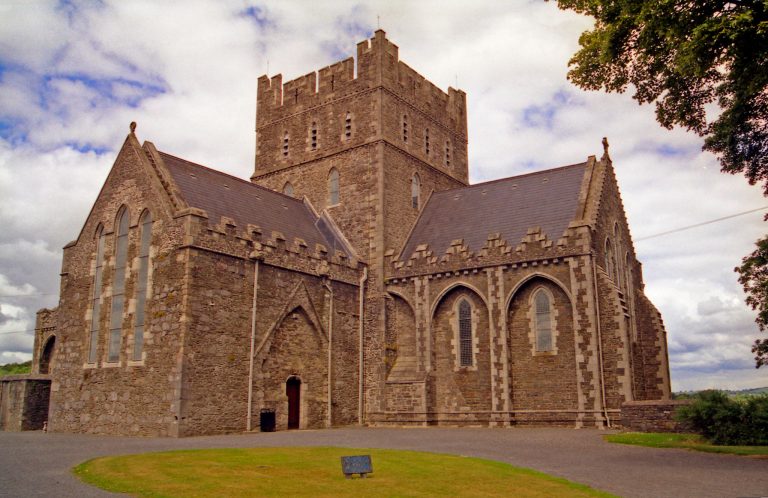
St Brigids cathedral in Kildare town.
Read Article
Hill of Allen (1)
Read Article
The King (1)
Read Article
The stone of the Divisions (AKA the Cat Stone) on the Hill of Uisneach in County Meath is is possibly the most signifcant ancient monument in the whole country. Firstly, legend say that this is the burial place of Queen Eriu, Queen of the Tuatha de Danann (A powerful, magical race that inhabited Ireland before the Celts). She was defeated and mortally wounded in a battle with the Celtic King, Amergen granted her a dying wish. He promised her that the island would bear her name forever – The Gaelic name Eriú was later changed by the Vikings into “Eriú’s Land”, or Ireland. This 30-ton stone looks more like a giant bolder that has been cracked into several pieces. The splits are believed to represent the ancient divisions of Ireland. A book called Beneath the Shadow of Uisneach, says that it was from here that the five ancient provinces of Ireland met, symbolising this as the centre of Ireland. The stone’s Irish name depicts this: Ail na Mireann (“Stone of the Divisions”). The division were first made by the Fir Bolg. It is on this hill that the first fire was lit for the ancient festival of Bealtaine. It was said that a fire lit at the summit here could be seen all over Ireland, and that all fires were lit from this one. This hill was also the gathering place of the kings of Ireland.
Read Article
Croagh Patrick Chapel
Read Article
The stone of the Divisions (AKA the Cat Stone) on the Hill of Uisneach in County Meath is is possibly the most signifcant ancient monument in the whole country. Firstly, legend say that this is the burial place of Queen Eriu, Queen of the Tuatha de Danann (A powerful, magical race that inhabited Ireland before the Celts). She was defeated and mortally wounded in a battle with the Celtic King, Amergen granted her a dying wish. He promised her that the island would bear her name forever – The Gaelic name Eriú was later changed by the Vikings into “Eriú’s Land”, or Ireland. This 30-ton stone looks more like a giant bolder that has been cracked into several pieces. The splits are believed to represent the ancient divisions of Ireland. A book called Beneath the Shadow of Uisneach, says that it was from here that the five ancient provinces of Ireland met, symbolising this as the centre of Ireland. The stone’s Irish name depicts this: Ail na Mireann (“Stone of the Divisions”). The division were first made by the Fir Bolg. It is on this hill that the first fire was lit for the ancient festival of Bealtaine. It was said that a fire lit at the summit here could be seen all over Ireland, and that all fires were lit from this one. This hill was also the gathering place of the kings of Ireland.
Read Article
Mt. Errigal in Dunlewey, County Donegal, Ireland.
Read Article
Rolling backwards up Gravity Hill on the Cooley Peninsula in County Louth, Ireland.
Read Article